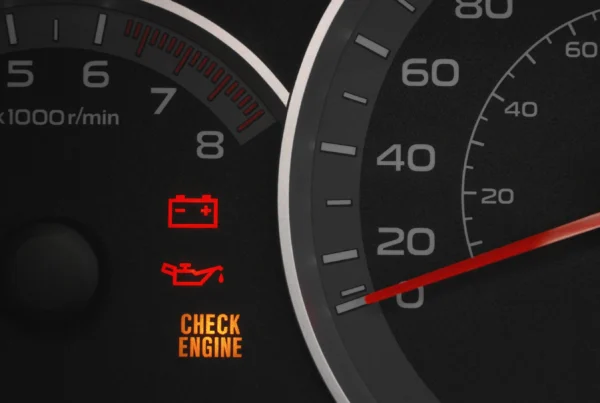

If the oil-pressure light flickers while you are driving or idling in Lexington traffic, pull over safely without accelerating more than necessary. Then shut off the engine. Do not keep driving to see if the light disappears. Once parked on level ground, follow your owner’s manual instructions for checking the oil level. If the warning stays on, returns, or cannot be addressed safely, have the vehicle towed.
An oil-pressure warning is more serious than an oil-change reminder. The pressure light can mean the engine is not getting proper lubrication, although a faulty sensor or electrical problem can also trigger it. An oil-change message reports that scheduled maintenance is due. It does not usually mean you need to stop the engine immediately.
What should you do when the oil-pressure light flickers?
You may first notice the red oil-can symbol while sitting at a traffic light. It might flicker at idle, then disappear when you press the accelerator. That does not mean the vehicle is safe to drive.
Here is what to do:
- Signal and pull over safely. Avoid hard acceleration while moving out of traffic.
- Turn on your hazard lights if needed.
- Shut off the engine. Do not let it idle while you decide what to do next.
- Check the oil level as directed in the owner’s manual. Park on level ground and wait as long as the manual recommends before reading the dipstick.
- Do not overfill the engine. If the level is low, use the correct oil and add only enough to reach the proper range.
- Keep the engine off if the warning remains or returns. Have the vehicle towed instead of driving it to a repair shop.
The key distinction is that the oil-pressure light indicates low pressure, not simply a low oil level. A low level can cause pressure problems, but the two conditions are not the same.
Why isn’t this the same as an oil-change reminder?
The two dashboard messages describe different conditions.
An oil-change reminder is a maintenance alert based on the vehicle’s calculated oil life. It means the oil is due or nearly due for replacement. If you are not sure which oil your engine needs, see which motor oil is right for Midlands stop-and-go driving.
An oil-pressure warning concerns the engine’s ability to circulate oil at the required pressure. It may also point to a problem with the sensor or electrical circuit that monitors pressure. If the pressure is truly low, critical engine parts may not be receiving enough lubrication.
Scheduling an oil change for later is not an adequate response to an active oil-pressure warning. Shut off the engine first and have the cause diagnosed. The vehicle may need an oil change, but changing the oil should not take the place of pressure testing.
Why can the oil-pressure light flicker at idle?
Oil pressure varies with engine speed and operating temperature. A pressure problem may become more noticeable after the engine warms up and slows to idle. The warning may disappear when engine speed increases, but that pattern does not reveal the cause.
A light that flickers at hot idle could mean the pressure is briefly falling below the warning threshold. It could also come from a faulty pressure sensor, damaged wiring, restricted oil flow, a pump problem, or internal engine wear. Pressing the accelerator and watching the light go out is not a reliable diagnostic test.
Even if the engine sounds normal and the dipstick shows a full oil level, do not assume the warning is false. The correct amount of oil does not prove that it is circulating at the required pressure.
What can cause low oil pressure or a false warning?
Several problems can trigger the same dashboard light. Proper testing can distinguish an electrical fault from a mechanical problem.
1. Low engine oil level
When the engine does not contain enough oil, the lubrication system may struggle to maintain pressure. The level may be low because of a leak, incorrect filling, or another oil-loss issue.
Start with an accurate dipstick reading taken under the conditions listed in the owner’s manual. Never add oil above the indicated range.
2. Faulty oil-pressure sensor or electrical circuit
A failing sensor, loose or damaged connector, wiring issue, or circuit fault can cause an incorrect or intermittent warning.
If direct testing shows that the actual pressure is within specification but the sensor signal is erratic, the repair may involve the sensor or its circuit. Replacing parts based on the warning light alone is guesswork.
3. Clogged pickup screen or debris restriction
The oil pump draws oil through a pickup in the oil pan. Debris or a clogged pickup screen can restrict that flow. On some engines, debris can also interfere with oil-pressure control components.
The correct inspection procedure depends on the vehicle. Technicians may need to check electrical connections, scan-tool data, the pickup, and pressure-control components before considering pump replacement.
4. Worn or malfunctioning oil pump
The pump circulates oil through the engine. If it is worn, damaged, or not being controlled correctly, pressure may drop below the manufacturer’s specification.
A warning light does not prove the pump has failed. A technician needs to measure the actual pressure and complete the appropriate diagnostic steps before recommending replacement.
5. Excessive internal engine wear
Oil travels through small, controlled clearances inside the engine. As internal parts wear and those clearances grow, the engine may have trouble maintaining pressure, especially at certain temperatures or engine speeds.
An engine can hold the correct quantity of oil and still have inadequate pressure.
How does a shop verify actual oil pressure?
A technician should test the system before blaming the warning sensor or recommending major engine work. The goal is to determine whether the engine truly has low pressure or the warning comes from an electrical fault.
The process usually includes:
- Checking the oil level and condition. The technician confirms the dipstick reading and correct oil specification, then looks for leaks or unusual oil condition.
- Reviewing diagnostic information. Trouble codes (the same kind of codes behind a check engine light) and scan-tool data may point to a sensor, circuit, control, or pump problem.
- Inspecting the sensor and wiring. The connector, wiring, electrical readings, and sensor response are checked as applicable.
- Measuring the actual oil pressure. A suitable pressure gauge or transducer is connected at the specified test point.
- Testing under the required conditions. The manufacturer may require readings at specific engine temperatures and speeds.
- Comparing readings with the correct specifications. Pressure requirements vary by engine and operating condition.
- Investigating mechanical causes. If pressure is low, further work may include checking the pickup, pressure-control components, oil pump, or internal engine clearances.
This testing helps prevent two expensive errors: dismissing real low pressure as a bad sensor, or recommending internal repairs when the pressure is normal.
Can you restart the engine after adding oil?
Follow the instructions in your owner’s manual. If the dipstick was below the safe range, add the correct oil in small amounts until the level reaches the indicated range. Do not overfill the engine.
If the manual allows you to restart the engine after correcting the level, shut it off immediately if the warning light:
- Stays on
- Starts flickering again
- Goes out and then returns
- Appears with ticking, knocking, or rattling noises
Do not keep restarting the engine to see if the warning clears. If the oil level was already normal, you cannot check it safely, or the warning returns, have the vehicle towed.
Where can Lexington drivers have an oil-pressure warning diagnosed?
Abbott’s Auto Care & Tire provides confirmed oil-change, engine diagnostic, and engine-repair services. Our engine inspections include checking oil and other fluid levels, looking for leaks or abnormal wear, evaluating engine performance, and reviewing diagnostic codes.
If your oil-pressure light flickered in traffic, came on at idle, or stayed illuminated after you checked the oil, shut off the engine instead of guessing at the cause. Contact Abbott’s Auto Care & Tire for a current quote, then schedule an appointment for proper diagnosis.